River Cruise vs. Ocean Cruise: Key Differences to Help You Choose
January 15, 2026 - Skylar
When planning a cruise, you’ll have to decide between whether you want to take a river cruise or an ocean cruise. To decide, you might think, are ocean cruises better than river cruises? Why take a river cruise? Which is better? Here are 12 differences between a river cruise vs. ocean cruise that will impact your sailing experience and help you decide which cruise is right for you.
Quick Answer:
A river cruise offers smaller ships, immersive destinations, fewer crowds, and included excursions—ideal for culture-focused travelers. Ocean cruises feature larger ships, more entertainment, family-friendly amenities, and broader itineraries. The right choice depends on your travel style, budget, mobility needs, and itinerary priorities.
Key Takeaways
River cruises focus on destinations; ocean cruises focus on onboard experience
River cruises are more intimate; ocean cruises offer more variety
Ocean cruises suit families and first-timers; river cruises suit experienced travelers
Costs are structured differently (what’s included matters more than sticker price)
Insurance needs differ slightly due to itinerary and medical access
River cruise ships are significantly smaller to accommodate navigating smaller waterways, typically carrying fewer than 200 passengers. This creates a quieter, more intimate experience with minimal crowds. Ocean cruise ships, by contrast, can carry thousands of passengers and function like floating resorts with extensive onboard amenities.
Why it matters: Ship size directly impacts crowd levels, onboard atmosphere, wait times, and the overall pace of your vacation.
Example of an Ocean Liner: Symphony of the Seas, Royal Caribbean
Staterooms & Cabin Layout
River cruise staterooms are generally smaller but almost always include a window or balcony due to being located on the perimeter of the ship. Ocean cruises offer a wider range of cabin types, including interior rooms without windows, often at a lower price point.
If you want a stateroom with a window or a balcony on an ocean cruise, you will likely pay extra for that. If you’re on the hunt for an outdoor or “step-out” balcony, we recommend checking out AmaWaterways cruises, which offer what’s called “twin balcony” staterooms.
Why it matters: If natural light and views are important to you, river cruises deliver consistency, while ocean cruises offer more pricing flexibility.
Passenger Count & Crowd Levels
River cruises host far fewer passengers, which often leads to quicker embarkation, easier dining access, and a more social atmosphere. Ocean cruises accommodate thousands of guests, which can mean longer waits but more variety in activities and entertainment.
Why it matters: This difference affects everything from dining logistics to how personalized the experience feels.
Typical Passengers
River cruises tend to attract an older audience because they are usually more low-key and educational. People who opt for river cruises are often well-educated and interested in the culture of their port cities. Although kids can sail on most river cruises, there is less for them to do, so there are generally fewer children aboard river ships.
Ocean cruisers are all over the map. The wide range of available experiences and the large number of sailors on ocean cruises means the demographics vary greatly on each cruise ship. If you decide to go for an ocean cruise, you can research what’s available on the ship to get a better sense of what people might be on the vessel. For example, if you’re looking for a low-key and relaxing experience, we’d recommend steering clear of ships with bustling amusement options for all ages.
Onboard Entertainment & Amenities
This is one of the big ones. On ocean liners, you’ll often find a variety of shows and performances — from comedy to song and dance, to magic shows. You’ll also likely have access to a casino and an assortment of bars and lounges onboard. On a river cruise, the activities are much more low-key. For example, local musicians will often come while the ship is at port to put on a show in one of the ship’s lounges, or the cruise might host a cultural program meant to enrich your travel experience.
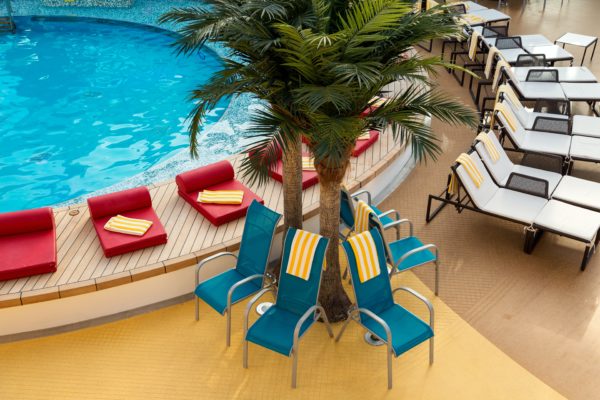
Because of the ship size, ocean cruises are able to house on-deck pools and other activities like rock walls and games, amongst other amenities. River cruises, in contrast, are generally too small for those things. Both types of ships usually have spaces for libraries, gyms, and spas onboard.
Regarding spas, an ocean cruise will likely have a greater range of available treatments than a river cruise. So keep that in mind if a spa experience is something you want to include.
Why it matters: Ocean cruises are ideal if onboard activities are central to your vacation; river cruises prioritize off-ship experiences.
Dining Style & Meal Flexibility
Ocean cruises offer multiple dining venues, extended dining hours, and 24/7 food options—though some specialty dining costs extra. River cruises usually have one main or two dining rooms with set meal times and regionally inspired menus, often included in the fare.
Sometimes, when you stop at the port, river cruise chefs will pick up fresh ingredients at the local markets. This way, you’ll really get a taste of the destination. As a trade-off, river cruise meals and cuisine won’t have the variety that you would experience on an ocean liner.
Why it matters: If flexibility and variety are important, ocean cruises win. If curated, destination-focused dining appeals to you, river cruises shine.
Destinations, Ports & Shore Excursions
River cruises visit smaller cities and dock close to town centers, allowing frequent and easy access to destinations. This is a big reason why less entertainment is available on river cruises. Ocean cruises visit fewer ports, often larger tourist hubs, and may require transportation from port to city center. Be aware that excursions on an ocean cruise usually cost extra and must be scheduled in advance most times.
Why it matters: River cruises maximize time ashore during the day and travel to new destinations each night. Whereas, ocean cruises balance port days with onboard sea days.
Accessibility, Mobility & Walking Requirements
River cruises often require:
Frequent walking tours on uneven terrain
Cobblestone streets, stairs, and narrow gangways
More physical stamina for daily excursions
Accessibility options are limited due to smaller ship size
Ocean cruises are generally more accessible:
Wider corridors, elevators, and accessible staterooms
Better wheelchair access throughout the ship
More low-impact and shuttle-supported excursions
Why it matters: Travelers with mobility or balance concerns usually find ocean cruises more comfortable, while river cruises may require greater physical ability.
Time at Sea vs. Time Ashore
River cruises spend most nights docked and days exploring destinations, with minimal sailing time. Ocean cruises include scheduled sea days where the ship itself becomes the primary attraction.
Why it matters: Choose river cruises if sightseeing is your priority; choose ocean cruises if you enjoy onboard relaxation and entertainment.
Motion, Stability & Seasickness
If seasickness is an issue for you, this is an important factor. Those aboard often experience less seasickness on river cruises. This can be because ships on the river are more stable than ocean liners. Rivers are also less turbulent than the ocean, which can cascade into massive waves at any point. You’re also sailing less on a river cruise, which means you have longer stints of sea time on an ocean liner–and a higher chance of getting seasick.
Why it matters: Travelers prone to motion sickness often find river cruises more comfortable.
How Travel Insurance Considerations Differ for River vs. Ocean Cruises
While both cruise types benefit from travel insurance, the risks—and coverage priorities—aren’t exactly the same.
River cruises often involve:
Frequent port changes that increase missed connection risk
More walking-heavy excursions, raising the chance of trip interruption due to injury
Smaller regional hospitals, making medical evacuation coverage important
Ocean cruises typically require:
Higher medical evacuation limits due to distance from shore
Strong trip interruption coverage for mid-cruise disembarkation
Protection for costly non-refundable excursions and pre-/post-cruise travel
Why it matters: The best travel insurance policy isn’t just about the cruise—it’s about matching coverage limits and benefits to how and where you’ll be traveling.
Pro Tip: Don’t just opt for the travel insurance offered by the cruise line! It’s often more expensive and has less coverage than plans offered by third-parties, like Yonder Travel Insurance. Check out the real differences in our article on cruise insurance vs. travel insurance.
What is the main difference between a river cruise and an ocean cruise?
River cruises focus on immersive destinations, smaller ships, and cultural experiences, while ocean cruises emphasize onboard entertainment, larger ships, and a wider range of amenities. The experience differs more in style than quality.
Are river cruises better than ocean cruises?
It really depends on the traveler. River cruises are ideal for travelers who prefer smaller groups and frequent port visits. Ocean cruises suit travelers who want entertainment, variety, and family-friendly options.
Are river cruises more expensive than ocean cruises?
River cruises often appear more expensive upfront but include excursions, dining, and beverages. Ocean cruises may have lower base fares but charge extra for excursions, specialty dining, and activities.
Which type of cruise is better for first-time cruisers?
Ocean cruises are often better for first-time cruisers due to flexible dining, abundant activities, and familiarity. River cruises are better suited for travelers who value destinations over onboard entertainment.
Do river and ocean cruises require different travel insurance?
The core coverage is similar, but river cruises may require stronger trip interruption protection, while ocean cruises benefit from higher medical evacuation coverage due to time spent at sea and remote locations.
So, when it comes to a river cruise vs. ocean cruise, which one intrigues you the most? If a river cruise is right for you, here are a few things you should know before insuring your river cruise.
Skylar, a seasoned content writer with over seven years of experience, possesses a deep understanding of the travel and travel insurance industries. Her commitment to authenticity infuses her work with a unique perspective, drawing from three years of dedicated writing in the travel and travel insurance sectors. Skylar's expertise is further enriched by her proactive approach to seeking insights from industry professionals, ensuring that her findings are comprehensive and reliable.
Lorem ipsum dolor sit amet, consectetur adipiscing elit, sed do eiusmod tempor incididunt ut labore et dolore magna aliqua. Ut enim ad minim veniam, quis nostrud exercitation ullamco laboris nisi ut aliquip ex ea commodo consequat. Duis aute irure dolor in reprehenderit in voluptate velit esse cillum dolore eu fugiat nulla pariatur. Excepteur sint occaecat cupidatat non proident, sunt in culpa qui officia deserunt mollit anim id est laborum
Departure Date Info
Lorem ipsum dolor sit amet, consectetur adipiscing elit, sed do eiusmod tempor incididunt ut labore et dolore magna aliqua. Ut enim ad minim veniam, quis nostrud exercitation ullamco laboris nisi ut aliquip ex ea commodo consequat. Duis aute irure dolor in reprehenderit in voluptate velit esse cillum dolore eu fugiat nulla pariatur. Excepteur sint occaecat cupidatat non proident, sunt in culpa qui officia deserunt mollit anim id est laborum
Return Date Info
Lorem ipsum dolor sit amet, consectetur adipiscing elit, sed do eiusmod tempor incididunt ut labore et dolore magna aliqua. Ut enim ad minim veniam, quis nostrud exercitation ullamco laboris nisi ut aliquip ex ea commodo consequat. Duis aute irure dolor in reprehenderit in voluptate velit esse cillum dolore eu fugiat nulla pariatur. Excepteur sint occaecat cupidatat non proident, sunt in culpa qui officia deserunt mollit anim id est laborum
State of Residence Info
Lorem ipsum dolor sit amet, consectetur adipiscing elit, sed do eiusmod tempor incididunt ut labore et dolore magna aliqua. Ut enim ad minim veniam, quis nostrud exercitation ullamco laboris nisi ut aliquip ex ea commodo consequat. Duis aute irure dolor in reprehenderit in voluptate velit esse cillum dolore eu fugiat nulla pariatur. Excepteur sint occaecat cupidatat non proident, sunt in culpa qui officia deserunt mollit anim id est laborum
Number of Travelers Info
Lorem ipsum dolor sit amet, consectetur adipiscing elit, sed do eiusmod tempor incididunt ut labore et dolore magna aliqua. Ut enim ad minim veniam, quis nostrud exercitation ullamco laboris nisi ut aliquip ex ea commodo consequat. Duis aute irure dolor in reprehenderit in voluptate velit esse cillum dolore eu fugiat nulla pariatur. Excepteur sint occaecat cupidatat non proident, sunt in culpa qui officia deserunt mollit anim id est laborum
Trip Cost Info
Lorem ipsum dolor sit amet, consectetur adipiscing elit, sed do eiusmod tempor incididunt ut labore et dolore magna aliqua. Ut enim ad minim veniam, quis nostrud exercitation ullamco laboris nisi ut aliquip ex ea commodo consequat. Duis aute irure dolor in reprehenderit in voluptate velit esse cillum dolore eu fugiat nulla pariatur. Excepteur sint occaecat cupidatat non proident, sunt in culpa qui officia deserunt mollit anim id est laborum
Deposit Date Info
Lorem ipsum dolor sit amet, consectetur adipiscing elit, sed do eiusmod tempor incididunt ut labore et dolore magna aliqua. Ut enim ad minim veniam, quis nostrud exercitation ullamco laboris nisi ut aliquip ex ea commodo consequat. Duis aute irure dolor in reprehenderit in voluptate velit esse cillum dolore eu fugiat nulla pariatur. Excepteur sint occaecat cupidatat non proident, sunt in culpa qui officia deserunt mollit anim id est laborum
Travel Style Info
Lorem ipsum dolor sit amet, consectetur adipiscing elit, sed do eiusmod tempor incididunt ut labore et dolore magna aliqua. Ut enim ad minim veniam, quis nostrud exercitation ullamco laboris nisi ut aliquip ex ea commodo consequat. Duis aute irure dolor in reprehenderit in voluptate velit esse cillum dolore eu fugiat nulla pariatur. Excepteur sint occaecat cupidatat non proident, sunt in culpa qui officia deserunt mollit anim id est laborum



 Ship Size & Overall Cruise Experience