Comparing Travel Insurance Medical Coverage: What Experts Say Actually Matters
February 24, 2026 - Meagan Palmer
Comparing travel insurance medical coverage can feel like you’re reading fine print in a different language. But a few key benefit lines tell you almost everything about how protected you’ll be if you get sick or hurt. Once you know what to look for, you can compare confidently and pick coverage that fits your trip, not just your budget.
Quick Answer: What matters when comparing travel insurance medical coverage?
If you’re comparing travel insurance medical coverage, start with your Emergency Medical limit and aim for at least $100,000. Then confirm the plan covers hospitalization, the Medical Evacuation amount is strong, and you understand what you must do during an emergency on your trip, especially calling the 24/7 assistance number to document the event and get help arranging payment.
Key Takeaways
Start with Emergency Medical: Look for at least $100k, especially for international trips or remote itineraries.
Hospital stays drive big bills: 50% of Yonder Travel Insurance customers’ medical claims were for being hospitalized during their trip.
Evacuation is not automatic: You need to understand what triggers evacuation coverage and what approvals are required.
Call the 24/7 assistance line fast: It documents the claim and can help with advance payments when bills are large.
Match benefits to your trip style: Use Yonder Travel Insurance’s travel style filters on the quote results page to narrow policies best suited for your trip.
Comparing Travel Insurance Medical Coverage: The Benefits That Matter
Most travel insurance plans include medical benefits. That’s the good news!
The tricky part is that “includes medical” doesn’t tell you how much coverage you actually have, what situations qualify, or what you’re required to do during an emergency. Comparing travel insurance medical coverage is less about scanning a long list of perks and more about checking a few high-impact lines that decide whether you’re confidently covered or stuck negotiating a huge bill from far away.
Here’s the short list of medical-related benefit areas you should compare first:
Emergency Medical limit
Hospitalization coverage within Emergency Medical
Medical Evacuation limit and requirements
Repatriation of remains (not pleasant, but important)
24/7 assistance services, and what they can coordinate
Exclusions and conditions you must follow to stay eligible
“When you compare medical coverage, don’t start with the price, start with the scenarios that can bankrupt a trip: hospitalization and evacuation. That’s where the real protection shows up.” , Terry Boynton, President, Yonder Travel Insurance
Emergency Medical Coverage: Your First Comparison Point
Emergency Medical Expense is the benefit that pays for eligible medical expenses if you get sick or injured during your trip. Think doctor visits, tests, prescriptions, and the big one, hospital stays.
When you’re comparing travel insurance medical coverage, this is the number most people should anchor on.
Look for at least $100k in Emergency MedicalExpense
A practical baseline is $100,000 in Emergency Medical. That’s not because every claim is huge, it’s because the claims that are huge tend to be huge fast.
And there’s a helpful pattern: plans that offer at least $100k in Medical Expense benefits often also include sufficiently higher Medical Evacuation coverage. Not always, so you still need to verify the evacuation limits. But it’s a strong first filter.
Why this matters in real life: 50% of Yonder Travel Insurance customers’ medical claims were for being hospitalized during their trip.
Hospital stays are where costs can spike quickly, especially if you need imaging, specialists, surgery, or several nights of monitoring.
If you want context on common travel health risks and prevention steps, review the CDC’s travel health guidance.
Expert Advice: If your trip includes remote areas, cruising, multi-country itineraries, or higher-risk activities, compare plans using $100k Emergency Medical as your floor. Then focus your energy on evacuation rules and assistance services, because that’s where travelers get surprised.
Medical Evacuation and Repatriation: What “getting you home” Really Means
Medical Evacuation typically covers eligible transport to the nearest appropriate medical facility when local care can’t treat you properly. In some cases, it can also cover transport back home after you’re stabilized, depending on the plan language.
Yonder recommends comparing medical evacuation coverage with these questions:
What triggers evacuation coverage? For example, does it require that a treating physician and the assistance company agree it’s medically necessary?
What’s required of you? Many plans require coordination through the 24/7 assistance provider, except when you can’t reasonably do so.
Also, look for Repatriation of Remains coverage. Nobody likes reading that line, but it’s a meaningful benefit if the worst happens.
Quick Comparison of Medical Benefit Comparisons
Coverage item
What to compare
Why it matters
Emergency Medical
$100k+ target
Hospitalization and treatment costs can climb fast
Medical Evacuation
High limit plus “medically necessary” terms
Coordination rules can affect eligibility
24/7 Assistance
How they help: referrals, coordination, payments
Support can reduce delays and documentation issues
Payment, Documentation, and the 24/7 Assistance Line
Most travel insurance plans will reimburse you for medical expenses you incur during your trip. That often means you pay out of pocket first, then submit receipts and medical records for reimbursement via a claim after your return home.
But when the medical bill is large, you still have options.
Call the 24/7 Emergency Provider Early
If you end up in a hospital or face a major bill, call the 24/7 emergency assistance provider as soon as you can. It does two important things:
Documents the event while it’s happening, which can reduce headaches when you file your claim.
May help with advance payments or payment arrangements, depending on the situation and the plan.
Even if you’re not sure it’s “serious enough,” calling creates a record and gets you guidance. If you can’t call, ask a travel companion, hotel staff, or the hospital to help. You can learn more tips on filing a successful travel insurance claim in our full guide.
For destination-specific entry and local considerations that can affect your planning, keep an eye on the State Department travel information for your destination.
Pro Tip: Treat the assistance line like your medical coverage “control center”. Save the assistance number in your phone before you leave. Also keep it written down. If you need an evacuation, the assistance team’s coordination is often part of keeping the evacuation eligible under the plan’s terms, and it can speed up approvals, referrals, and documentation.
What Medical Expenses are Covered (and what’s usually excluded)
Most travel insurance plans include medical benefits, but you still need to know what counts as an eligible expense.
Doctor visits and diagnostics: exams, imaging, lab work
Prescription medications: when prescribed for a covered illness or injury
Emergency dental for pain relief: often limited, but worth checking
Common limitations you should watch for while comparing:
Non-emergency or routine care: many plans focus on urgent or emergency treatment during the trip
Excluded activities: some plans limit coverage for certain sports or higher-risk activities unless included
Evacuation rules: the plan might require pre-approval or coordination unless it’s impossible due to the emergency
If you’re traveling somewhere with limited facilities, it’s smart to sanity-check local medical access. A simple starting point is the WHO’s country health profiles.
How to Compare Policies Quickly Using Filters
You’ll get better results when you compare plans that were designed for your kind of trip.
Use Yonder Travel Insurance’s travel style filters on the quote results page to narrow down policies with coverage specifically for the type of trip you’re taking. Then compare medical coverage within that smaller, more relevant set.
A fast, practical comparison workflow:
Filter by your trip style first (the type of trip you’re actually taking).
Find plans with Emergency Medical Expense of $100k+ as your starting point.
Click “View Plan Highlights” for specifics on each benefit.
Check Medical Evacuation for a strong limit and clear “medically necessary” wording.
Read the “what you must do” section for emergencies and evacuation. Look for references to calling the assistance provider.
Scan exclusions that relate to your itinerary (activities, remote travel, etc.).
Pro Tip: Not sure how to read the fine print of a policy? On Yonder’s quote results page, you can view the full certificate for each plan option. Learn how to read and understand a policy certificate in our full guide.
You’re not trying to predict every possible illness. You’re building a safety net for the big stuff, especially hospitalization, and making sure you understand the rules that keep that net from having holes.
FAQ on Comparing Travel Insurance Medical Coverage
What’s the most important number when comparing travel insurance medical coverage?
Start with your Emergency Medical limit. A good benchmark is at least $100,000, then confirm your Medical Evacuation benefit is strong and the evacuation requirements are clear.
Why does hospitalization matter so much for travel insurance?
Hospital care is one of the fastest ways for costs to stack up. In fact, 50% of Yonder Travel Insurance customers’ medical claims were for being hospitalized during their trip, which is exactly why higher Emergency Medical limits can be so valuable.
Do I usually have to pay out of pocket and get reimbursed?
Often, yes. Most plans reimburse eligible medical expenses you incur during the trip. If the bill is large, call the 24/7 assistance provider to document the event and ask about help with advance payments or billing arrangements.
Does Medical Evacuation mean you’ll automatically be flown home?
Not automatically. Evacuation is usually tied to medical necessity and may require coordination or approval through the plan’s assistance provider. Read the benefit language so you know what’s required of you.
What should I do before my trip to make a medical claim easier?
Save the 24/7 assistance number, keep a digital copy of your plan documents, and know where to find your coverage limits. If something happens, call early, keep receipts, and ask the provider for itemized invoices and medical notes.
Meagan has spent over seven years at Yonder Travel Insurance mastering the "fine print" so travelers don’t have to. With a background spanning marketing and operations, she specializes in deconstructing complex policy jargon into clear, actionable advice that empowers travelers to explore with confidence. From selecting the perfect plan for a niche itinerary to navigating the intricacies of the claims process, Meagan provides the unbiased, expert travel insurance insights necessary to maximize benefits and minimize risk. By maintaining close partnerships with the travel insurance industry’s top providers, she stays at the forefront of emerging trends, ensuring her readers are always one step ahead of the unexpected.
Lorem ipsum dolor sit amet, consectetur adipiscing elit, sed do eiusmod tempor incididunt ut labore et dolore magna aliqua. Ut enim ad minim veniam, quis nostrud exercitation ullamco laboris nisi ut aliquip ex ea commodo consequat. Duis aute irure dolor in reprehenderit in voluptate velit esse cillum dolore eu fugiat nulla pariatur. Excepteur sint occaecat cupidatat non proident, sunt in culpa qui officia deserunt mollit anim id est laborum
Departure Date Info
Lorem ipsum dolor sit amet, consectetur adipiscing elit, sed do eiusmod tempor incididunt ut labore et dolore magna aliqua. Ut enim ad minim veniam, quis nostrud exercitation ullamco laboris nisi ut aliquip ex ea commodo consequat. Duis aute irure dolor in reprehenderit in voluptate velit esse cillum dolore eu fugiat nulla pariatur. Excepteur sint occaecat cupidatat non proident, sunt in culpa qui officia deserunt mollit anim id est laborum
Return Date Info
Lorem ipsum dolor sit amet, consectetur adipiscing elit, sed do eiusmod tempor incididunt ut labore et dolore magna aliqua. Ut enim ad minim veniam, quis nostrud exercitation ullamco laboris nisi ut aliquip ex ea commodo consequat. Duis aute irure dolor in reprehenderit in voluptate velit esse cillum dolore eu fugiat nulla pariatur. Excepteur sint occaecat cupidatat non proident, sunt in culpa qui officia deserunt mollit anim id est laborum
State of Residence Info
Lorem ipsum dolor sit amet, consectetur adipiscing elit, sed do eiusmod tempor incididunt ut labore et dolore magna aliqua. Ut enim ad minim veniam, quis nostrud exercitation ullamco laboris nisi ut aliquip ex ea commodo consequat. Duis aute irure dolor in reprehenderit in voluptate velit esse cillum dolore eu fugiat nulla pariatur. Excepteur sint occaecat cupidatat non proident, sunt in culpa qui officia deserunt mollit anim id est laborum
Number of Travelers Info
Lorem ipsum dolor sit amet, consectetur adipiscing elit, sed do eiusmod tempor incididunt ut labore et dolore magna aliqua. Ut enim ad minim veniam, quis nostrud exercitation ullamco laboris nisi ut aliquip ex ea commodo consequat. Duis aute irure dolor in reprehenderit in voluptate velit esse cillum dolore eu fugiat nulla pariatur. Excepteur sint occaecat cupidatat non proident, sunt in culpa qui officia deserunt mollit anim id est laborum
Trip Cost Info
Lorem ipsum dolor sit amet, consectetur adipiscing elit, sed do eiusmod tempor incididunt ut labore et dolore magna aliqua. Ut enim ad minim veniam, quis nostrud exercitation ullamco laboris nisi ut aliquip ex ea commodo consequat. Duis aute irure dolor in reprehenderit in voluptate velit esse cillum dolore eu fugiat nulla pariatur. Excepteur sint occaecat cupidatat non proident, sunt in culpa qui officia deserunt mollit anim id est laborum
Deposit Date Info
Lorem ipsum dolor sit amet, consectetur adipiscing elit, sed do eiusmod tempor incididunt ut labore et dolore magna aliqua. Ut enim ad minim veniam, quis nostrud exercitation ullamco laboris nisi ut aliquip ex ea commodo consequat. Duis aute irure dolor in reprehenderit in voluptate velit esse cillum dolore eu fugiat nulla pariatur. Excepteur sint occaecat cupidatat non proident, sunt in culpa qui officia deserunt mollit anim id est laborum
Travel Style Info
Lorem ipsum dolor sit amet, consectetur adipiscing elit, sed do eiusmod tempor incididunt ut labore et dolore magna aliqua. Ut enim ad minim veniam, quis nostrud exercitation ullamco laboris nisi ut aliquip ex ea commodo consequat. Duis aute irure dolor in reprehenderit in voluptate velit esse cillum dolore eu fugiat nulla pariatur. Excepteur sint occaecat cupidatat non proident, sunt in culpa qui officia deserunt mollit anim id est laborum


 Comparing Travel Insurance Medical Coverage: The Benefits That Matter

 Filter by your trip style first (the type of trip you’re actually taking).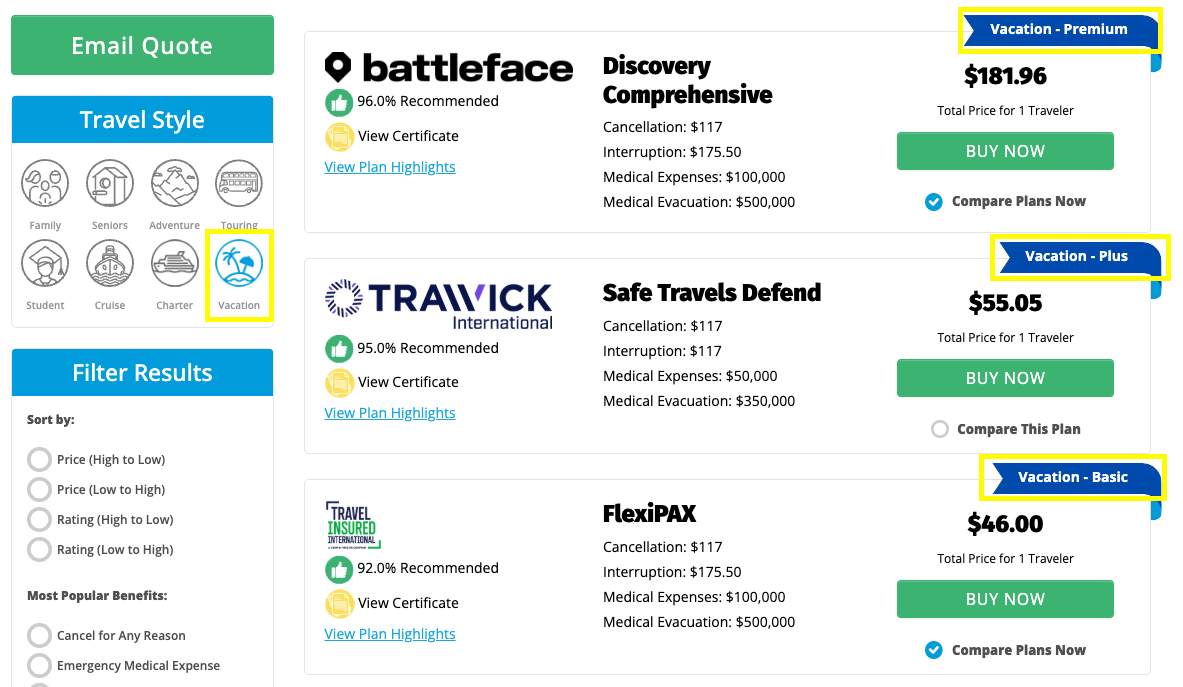
 Find plans with Emergency Medical Expense of $100k+ as your starting point.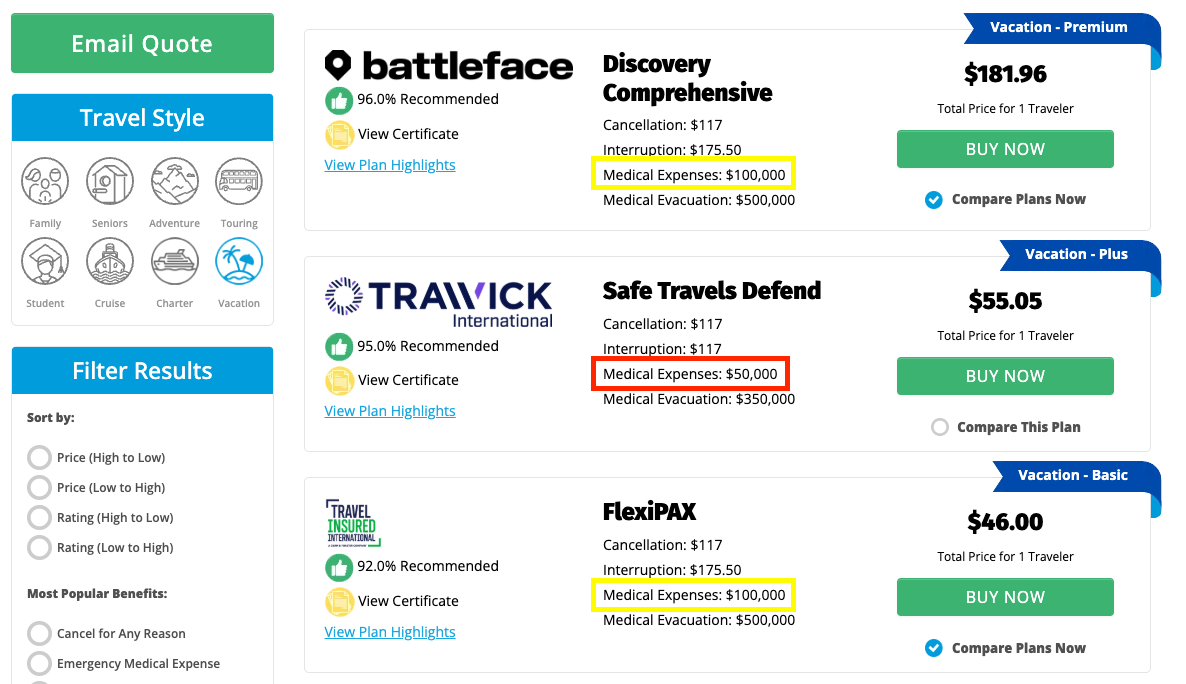
 Click “View Plan Highlights” for specifics on each benefit.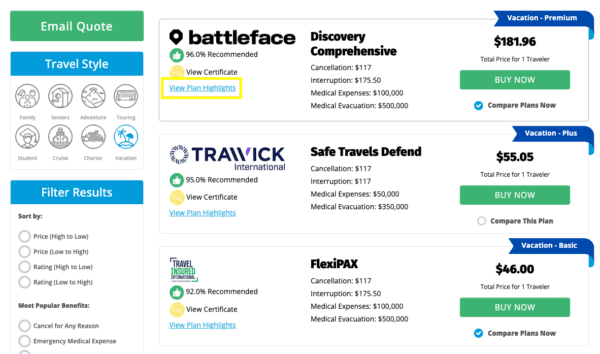
 Check Medical Evacuation for a strong limit and clear “medically necessary” wording.
 Read the “what you must do” section for emergencies and evacuation. Look for references to calling the assistance provider.
 Scan exclusions that relate to your itinerary (activities, remote travel, etc.).