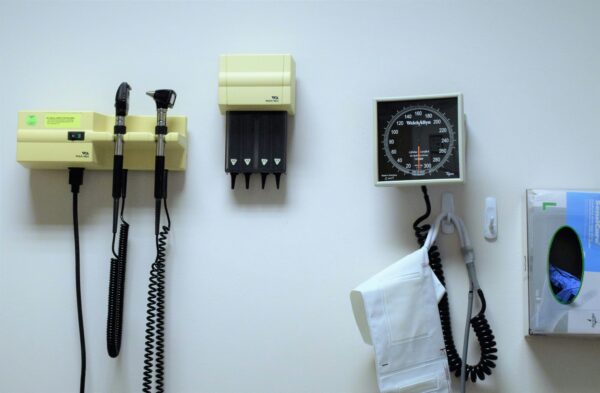
Cruise ship medical costs can shock you, even for something simple like a stomach bug or a twisted ankle. The ship’s medical center runs a lot like a private emergency clinic, and the bill adds up fast. The worst part is that you usually get charged immediately through your onboard account.
Quick Answer
Cruise ship medical visits often start around $100 to $200 during office hours, can jump to $300 to $600 after-hours, and common tests and treatments push many bills into the thousands. Overnight stays in the ship’s infirmary can run $1,000 to $3,000 per day, and a private helicopter medevac can cost $50,000 to $100,000.
Key Takeaways
Expect upfront charges: Ship medical bills are typically posted to your SeaPass or room account right away.
The doctor may be out-of-network: Most people don’t realize the ship’s doctor is often “out-of-network,” so your health plan may reimburse less, or not at all.
After-hours costs spike: In-cabin visits and nights can cost much more than daytime clinic hours.
Medevac is a different universe: Getting treated onboard is one thing, being airlifted to land is another, and the price gap is enormous.
Medicare won’t save you: Medicare generally doesn’t cover care outside U.S. territorial waters, and even within them, it’s limited.
Get the right documentation: Ask for an itemized bill, dates of service, provider details, and a diagnosis letter.
Primary medical coverage matters: It can speed reimbursement and sometimes helps with direct payment workflows.
Cruise ships aren’t floating hospitals. They’re self-contained resorts that also happen to be days away from the nearest ER. When you get sick at sea, you’re paying for limited staffing, specialized supplies, and the reality that the medical team has to be ready for everything from dehydration to cardiac events.
Then there’s the coverage issue.
Most people don’t realize cruises don’t accept stateside health insurance, meaning care onboard is incredibly expensive without additional travel insurance.
“The surprise isn’t that people get sick on cruises, it’s how fast a simple visit can turn into a four-figure bill once you add tests, meds, and after-hours care,” says Terry Boynton, co-founder and president of Yonder Travel Insurance.
What a Doctor Visit on a Cruise Really Costs
Start with the medical visit fee. This is what you pay for the doctor to see you, before any tests, medications, or procedures.
Typical pricing you’ll see quoted by cruise line guidance and passenger reports often looks like this:
Office hours consult: usually starts at $100 to $200 based on other traveler’s experiences
After-hours consult or in-cabin visit: can jump to $300 to $600 just to be seen
The exact price varies by cruise line, itinerary, and what “after-hours” means on that sailing. But the pattern is consistent: nights and cabin calls cost more.
Pro Tip: Treat “after-hours” like an ER visit
If you’re deciding between waiting for morning clinic hours or calling overnight, think in two buckets:
If it’s mild and stable, waiting may save you hundreds.
If it could escalate, don’t gamble to save the consult fee.
Saving $200 is never worth letting dehydration, asthma, or a possible infection spiral.
“ER” Pricing at Sea: Tests, Meds, and IVs
Cruise ships don’t call it an emergency room, but the pricing can feel that way once diagnostics and treatment kick in.
Here are estimated costs for common items you might be billed for:
Those are line-item style costs. Stack a consult plus an X-ray plus labs plus an IV, and you’re quickly in the $800 to $1,500 range, sometimes higher depending on the meds, repeat checks, and whether it’s after-hours.
Service
Typical shipboard scenario
Estimated cost
Doctor consultation
Office hours visit
$100–$200
Doctor consultation
After-hours or in-cabin
$300–$600
Diagnostics and treatment
X-ray + basic labs + IV meds
$500–$1,200+
Overnight in the Infirmary: Daily Rates That Sting
If the medical team wants to observe you overnight, or you’re too ill to return to your cabin, you may be admitted to the ship’s infirmary.
The range you’ll commonly see cited for shipboard inpatient-style care is:
Daily infirmary rate: $1,000 to $3,000 per day
That’s a gut punch, and it surprises people because the space feels small and basic. But pricing reflects staffing, monitoring, supplies, and the fact that you’re getting hospital-like care in a remote setting.
Treated Onboard vs. Medevac to Land: Two Very Different Bills
This is the line you don’t want to cross unless you have to.
Being treated onboard means you’re paying for:
Consults
Tests
Medications
IV fluids
Possible overnight monitoring
Being airlifted to a hospital on land adds a whole separate category of cost: emergency transport. Helicopter medical evacuations can often cost $50,000 to $100,000.
US Coast Guard rescues: The US Coast Guard generally does not charge for rescue services.
Private air ambulance: In most international waters, and many real-world cruise scenarios, you’re looking at a private air ambulance arrangement. That’s where the massive bill comes from.
Even when the Coast Guard is involved, it’s not a guarantee they can respond, or that your situation fits the type of mission they’ll perform in the location you’re in. Weather, distance, severity, and jurisdiction all matter.
The SeaPass Credit Card Trap
Here’s the part that ruins trips fast.
According to other cruise travelers, shipboard medical centers usually charge the SeaPass or room account immediately. That means a $5,000 medical bill can instantly max out your credit card.
Then what?
You can’t pay for shore excursions.
You can’t cover incidentals in port.
You may have limited room on your card for flights, hotels, or unexpected changes.
If you’re cruising with one primary card on file, consider carrying:
A backup card with available credit
A debit card for basics (used carefully)
Emergency cash for ports where cards fail
“Don’t get stuck with a $10,000 bill,” says Terry Boynton. “Compare cruise insurance plans that cover these costs through a site like Yonder Travel Insurance“.
If you’re a senior cruiser who assumes Medicare will ride to the rescue, this is where things get scary. Many cruise itineraries spend large portions of time outside those waters, even on popular routes.
If you have Medicare Advantage or a Medigap plan, you may have some coverage for emergencies abroad, but benefits vary widely and often come with limits and reimbursement rules. You need to confirm directly with your plan.
What Documentation to Get Before You Return Home
If you do end up in the medical center, your best move happens before you leave the ship.
To ensure a seamless claims process, Yonder Travel Insurance recommends a ‘collect-as-you-go’ approach to medical documentation. Before you disembark, always secure an itemized bill and a detailed statement of care, along with any official medical records the ship can provide.
Additionally, reach out to your policy’s 24/7 emergency assistance provider. They can supply specific forms for the onboard medical staff to sign on the spot. It is far easier to obtain these signatures while you are still on the ship than it is to track down a cruise line’s medical department once you’ve returned home.
What to request, specifically:
An itemized bill
The diagnosis from your doctor or nurse
Dates of service and provider details
Proof of payment from your SeaPass folio (or card receipt)
Insurance Bridge: Primary vs. Secondary Medical Coverage
People often compare a cruise ship medical bill to a domestic health plan copay, but the comparison breaks down fast. Ship doctors are almost always out-of-network, and payment is typically due before you disembark.
This is where the type of travel insurance you choose impacts your bank account:
Primary Medical Coverage: This is the “Gold Standard” for cruisers. The policy pays eligible expenses first. Because you don’t have to file with your domestic health insurance first, it can lead to much faster reimbursement. A wise choice if the ship just charged $5,000 to your credit card.
Secondary Medical Coverage: This requires you to file a claim with your home health provider first. For a cruiser, this means more paperwork and a much longer wait to get your money back while your credit card statement sits with a high balance.
How much does it cost to see a doctor on a cruise ship?
A standard office-hours visit often starts around $100 to $200. After-hours or in-cabin visits can run $300 to $600 just for the consultation, before tests and treatment.
Why are cruise ship medical costs so high?
You’re paying for private, fee-for-service care in a remote setting with limited resources. Also, the ship’s doctor is often out-of-network, so your normal health insurance pricing may not apply.
How much are common tests like X-rays and lab work onboard?
Estimated line items often start at $200+ for X-rays and $100+ for basic labs. IV fluids and medications commonly add $200 to $500.
What does an overnight stay in the ship’s infirmary cost?
Overnight monitoring can cost about $1,000 to $3,000 per day, similar to the kind of daily charges you might associate with high-acuity hospital care on land.
How much is a helicopter medevac from a cruise ship?
A private helicopter transport can cost $50,000 to $100,000. The US Coast Guard generally doesn’t charge for rescues, but private air ambulances, which are often required in international waters, do.
Will Medicare cover me on a cruise?
Generally, no. Medicare does not provide coverage outside of U.S. territorial waters, and even within them, it’s limited. Confirm any exceptions with your specific plan.
What paperwork should I get before leaving the ship?
You’ll generally want to get an itemized bill, proof of payment of that bill, a diagnosis letter, dates of service, and provider details.
Meagan has spent over seven years at Yonder Travel Insurance mastering the "fine print" so travelers don’t have to. With a background spanning marketing and operations, she specializes in deconstructing complex policy jargon into clear, actionable advice that empowers travelers to explore with confidence. From selecting the perfect plan for a niche itinerary to navigating the intricacies of the claims process, Meagan provides the unbiased, expert travel insurance insights necessary to maximize benefits and minimize risk. By maintaining close partnerships with the travel insurance industry’s top providers, she stays at the forefront of emerging trends, ensuring her readers are always one step ahead of the unexpected.
Lorem ipsum dolor sit amet, consectetur adipiscing elit, sed do eiusmod tempor incididunt ut labore et dolore magna aliqua. Ut enim ad minim veniam, quis nostrud exercitation ullamco laboris nisi ut aliquip ex ea commodo consequat. Duis aute irure dolor in reprehenderit in voluptate velit esse cillum dolore eu fugiat nulla pariatur. Excepteur sint occaecat cupidatat non proident, sunt in culpa qui officia deserunt mollit anim id est laborum
Departure Date Info
Lorem ipsum dolor sit amet, consectetur adipiscing elit, sed do eiusmod tempor incididunt ut labore et dolore magna aliqua. Ut enim ad minim veniam, quis nostrud exercitation ullamco laboris nisi ut aliquip ex ea commodo consequat. Duis aute irure dolor in reprehenderit in voluptate velit esse cillum dolore eu fugiat nulla pariatur. Excepteur sint occaecat cupidatat non proident, sunt in culpa qui officia deserunt mollit anim id est laborum
Return Date Info
Lorem ipsum dolor sit amet, consectetur adipiscing elit, sed do eiusmod tempor incididunt ut labore et dolore magna aliqua. Ut enim ad minim veniam, quis nostrud exercitation ullamco laboris nisi ut aliquip ex ea commodo consequat. Duis aute irure dolor in reprehenderit in voluptate velit esse cillum dolore eu fugiat nulla pariatur. Excepteur sint occaecat cupidatat non proident, sunt in culpa qui officia deserunt mollit anim id est laborum
State of Residence Info
Lorem ipsum dolor sit amet, consectetur adipiscing elit, sed do eiusmod tempor incididunt ut labore et dolore magna aliqua. Ut enim ad minim veniam, quis nostrud exercitation ullamco laboris nisi ut aliquip ex ea commodo consequat. Duis aute irure dolor in reprehenderit in voluptate velit esse cillum dolore eu fugiat nulla pariatur. Excepteur sint occaecat cupidatat non proident, sunt in culpa qui officia deserunt mollit anim id est laborum
Number of Travelers Info
Lorem ipsum dolor sit amet, consectetur adipiscing elit, sed do eiusmod tempor incididunt ut labore et dolore magna aliqua. Ut enim ad minim veniam, quis nostrud exercitation ullamco laboris nisi ut aliquip ex ea commodo consequat. Duis aute irure dolor in reprehenderit in voluptate velit esse cillum dolore eu fugiat nulla pariatur. Excepteur sint occaecat cupidatat non proident, sunt in culpa qui officia deserunt mollit anim id est laborum
Trip Cost Info
Lorem ipsum dolor sit amet, consectetur adipiscing elit, sed do eiusmod tempor incididunt ut labore et dolore magna aliqua. Ut enim ad minim veniam, quis nostrud exercitation ullamco laboris nisi ut aliquip ex ea commodo consequat. Duis aute irure dolor in reprehenderit in voluptate velit esse cillum dolore eu fugiat nulla pariatur. Excepteur sint occaecat cupidatat non proident, sunt in culpa qui officia deserunt mollit anim id est laborum
Deposit Date Info
Lorem ipsum dolor sit amet, consectetur adipiscing elit, sed do eiusmod tempor incididunt ut labore et dolore magna aliqua. Ut enim ad minim veniam, quis nostrud exercitation ullamco laboris nisi ut aliquip ex ea commodo consequat. Duis aute irure dolor in reprehenderit in voluptate velit esse cillum dolore eu fugiat nulla pariatur. Excepteur sint occaecat cupidatat non proident, sunt in culpa qui officia deserunt mollit anim id est laborum
Travel Style Info
Lorem ipsum dolor sit amet, consectetur adipiscing elit, sed do eiusmod tempor incididunt ut labore et dolore magna aliqua. Ut enim ad minim veniam, quis nostrud exercitation ullamco laboris nisi ut aliquip ex ea commodo consequat. Duis aute irure dolor in reprehenderit in voluptate velit esse cillum dolore eu fugiat nulla pariatur. Excepteur sint occaecat cupidatat non proident, sunt in culpa qui officia deserunt mollit anim id est laborum


 Cruise Ship Medical Costs: Why They’re So High