Best Travel Insurance for an African Safari: What to Compare Before You Buy
July 6, 2026 - Meagan Palmer
Planning an African safari is unlike planning almost any other vacation. Months of research go into choosing the right country, wildlife season, safari camps, guides, and flights. By the time departure arrives, you’ve likely invested thousands of dollars and countless hours into creating a once-in-a-lifetime experience. With so many prepaid reservations and independently arranged travel components, choosing travel insurance deserves just as much thought. The best travel insurance for an African safari isn’t simply the cheapest policy or the one with the longest list of benefits. It’s the one that fits the way you’ve planned your trip.
This guide explains how to compare safari travel insurance using practical decision frameworks, real safari scenarios, and insights from Yonder’s travel insurance experts. Rather than rehashing how travel insurance works, we’ll help you understand what matters most when comparing policies for one of the most memorable journeys you’ll ever take.
If you’re still exploring your options, our guide to touring travel insurance explains the broader considerations for multi-stop guided trips before diving into the safari-specific factors covered in this article.
Quick Answer
The best travel insurance for an African safari usually isn’t determined by the lowest premium. It’s determined by how well the policy fits the complexity of your itinerary.
When comparing safari travel insurance, start by looking at whether the policy reflects your full prepaid trip investment, accommodates every part of your itinerary, and provides benefits that match the way you’ll actually travel. For many safari travelers, that means paying close attention to trip cancellation and interruption, travel delay, missed connection, and medical expense and emergency medical evacuation benefits, especially when the trip includes multiple flights, remote safari camps, or visits to more than one country.
Rather than comparing policies benefit by benefit, compare them itinerary by itinerary. A luxury fly-in safari through Botswana has very different insurance considerations than a lodge-based safari in South Africa or a Kenya and Tanzania itinerary with several independent travel arrangements. The policy that best fits your trip is often the one that’s built around how you’re traveling, not simply where you’re going.
At a Glance: The Typical African Safari
Typical African Safari
Average trip length
8 to 14 days
Typical trip cost
$8,000 to $30,000+ per traveler*
Common transportation
International flights, regional flights, bush flights, ground transfers
Typical booking window
6 to 18 months before departure
*Actual trip costs vary depending on destination, accommodations, length of travel, and safari operator.
Key Takeaways
The best travel insurance for an African safari isn’t always the least expensive policy. It’s the one that best matches how your safari has been planned and booked.
A safari often includes more than the tour itself. Bush flights, safari camps, park fees, guided experiences, and trip extensions can all influence what you’ll want to compare before purchasing travel insurance.
Rather than comparing every policy feature, focus first on the benefits that are most relevant to your safari, such as trip cancellation, travel delay, missed connection, medical expense, and emergency medical evacuation.
Two travelers taking similar safaris can receive very different travel insurance quotes, making it worthwhile to compare multiple policies instead of relying on a single option.
Before requesting quotes, organize your itinerary, transportation, and prepaid travel expenses so you can compare policies with confidence.
What You’ll Learn
In this guide, you’ll learn:
How experienced safari travelers compare travel insurance before booking.
Which safari expenses are often overlooked when calculating your insured trip cost.
What factors influence safari travel insurance pricing.
Which travel insurance benefits deserve the closest comparison for different safari styles.
Real-world safari scenarios that demonstrate how insurance priorities can change depending on your trip.
A practical planning checklist to help you compare policies with confidence.
Why Safari Travel Requires A Different Approach To Comparing Travel Insurance
Not every safari looks the same.
Some travelers spend a week exploring South Africa’s private game reserves. Others combine Kenya and Tanzania into a two-country adventure with several safari camps, bush flights, and guided excursions. Some extend their trip with a beach stay in Zanzibar or Victoria Falls before heading home.
The more unique your travel plans become, the more important it is to compare travel insurance based on everything you’ve booked, not just the destination itself.
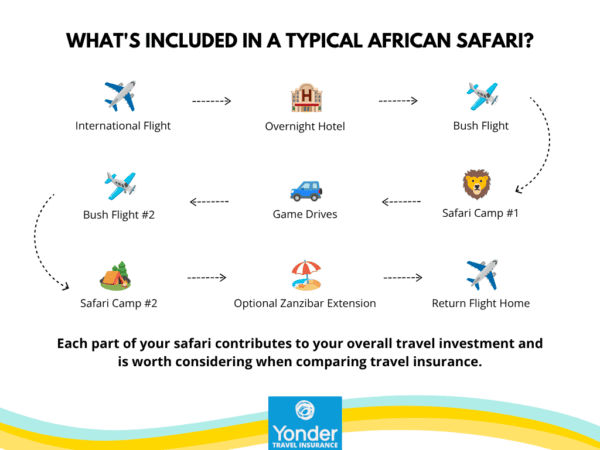
Unlike many vacations where you stay in one hotel and take a few day trips, a safari often includes several independently arranged reservations that work together to create one experience.
Your trip may involve:
International flights
Regional or bush flights
Safari lodges or tented camps
Ground transfers
National park or conservation fees
Guided game drives
Photography excursions
Pre- or post-safari hotel stays
Each reservation represents part of your overall travel investment and should be considered when comparing travel insurance.
Yonder Insight
One pattern we’ve noticed is that safari travelers often spend months researching destinations, wildlife seasons, and accommodations, yet spend very little time comparing travel insurance. Because so much of a safari is prepaid well before departure, taking the time to compare policies can be just as valuable as comparing lodges or tour operators.
Rather than searching for a policy with the longest list of benefits, start by understanding what you’ve actually booked. Once you’ve mapped out your complete safari experience, it becomes much easier to compare policies based on the parts of your trip that matter most.
Questions To Ask Before Comparing Safari Travel Insurance
Choosing the best travel insurance for an African safari isn’t about comparing dozens of policy features one by one. It’s about asking the right questions before you begin comparing plans.
Answering these questions first can help you focus on the benefits that are most relevant to your safari rather than getting overwhelmed by policy details.
Have You Calculated Your Total Safari Investment?
Your safari is likely made up of much more than the tour itself.
Before requesting travel insurance quotes, calculate your total prepaid, nonrefundable trip cost, including:
International airfare
Regional or bush flights
Safari lodges or camps
Guided safari packages
Ground transfers
Hotel stays before or after your safari
Optional excursions or extensions
Having an accurate total gives you a much better starting point for comparing policies than looking only at the advertised safari price. Read our full guide on how to calculate your total trip cost for a full walkthrough.
Which Parts Of Your Trip Would Be The Most Difficult To Replace?
Not every prepaid safari expense carries the same financial impact.
For some travelers, the largest investment may be a luxury safari lodge. For others, it could be a charter flight, a guided photography expedition, or several independently booked travel arrangements.
Thinking about where you’ve invested the most money can help you identify which travel insurance benefits deserve the closest comparison.
How Many Flights Are Included In Your Safari?
Many African safaris involve much more than one international flight.
Your trip may include regional airlines, bush flights, or additional flights between countries before you even arrive at your first safari camp.
The more flights your itinerary includes, the more valuable it becomes to compare benefits related to travel disruptions, such as travel delays and missed connections, alongside your other coverage priorities.
Will You Visit More Than One Country?
Many travelers combine multiple destinations into a single safari vacation.
For example, you might visit Kenya and Tanzania, add a beach extension in Zanzibar, or finish your trip with Victoria Falls before returning home.
If your safari spans multiple countries, compare policies with your complete travel plans in mind rather than focusing only on where your safari begins.
Which Benefits Should You Compare Most Closely?
While every safari is different, our travel insurance experts generally recommend spending the most time comparing these benefits:
Trip Cancellation & Trip Interruption
Medical Expense
Emergency Medical Evacuation
Travel Delay
Missed Connection
You don’t necessarily need the highest limits for every benefit. Depending on how all the parts of your safari trip work together will determine which benefits are more important to compare.
Safari Expenses Travelers Often Forget To Include
When travelers estimate the cost of their safari, they often think about the safari package itself. In reality, many African safaris include additional prepaid expenses that can significantly increase your overall travel investment.
Before comparing travel insurance policies, review every reservation you’ve paid for, not just the tour operator’s invoice.
Prepaid Expense
Why It’s Easy to Overlook
Regional or bush flights
These flights are often booked separately from your international airfare but are essential to reaching remote safari camps.
Safari lodges and tented camps
Travelers may stay at multiple properties throughout the trip, each with its own reservation and cancellation policy.
National park or conservation fees
Park entry fees are commonly prepaid as part of a safari package or booked separately.
Private guides or game drives
Some travelers book specialty guides or private vehicles in addition to their standard safari itinerary.
Photography safaris or workshops
Guided photography experiences are often reserved well in advance and may involve separate prepaid costs.
Hotel stays before or after the safari
Overnight accommodations are common before early morning departures or after returning from remote parks.
Ground transfers
Airport transfers and transportation between lodges may be prepaid through different providers.
Trip extensions
Popular add-ons like Zanzibar, Cape Town, Victoria Falls, or wine country tours can represent a significant portion of your overall travel investment.
What Does Travel Insurance for an African Safari Typically Cost?
The examples below illustrate how pricing may vary for different safari vacations. Replace these sample premiums with current first-party quote data from Yonder.
Safari Scenario
Trip Cost
Traveler(s) Age
Sample Premium on Yonder
South African safari lodge vacation
$8,500
45
$187
Kenya & Tanzania safari
$15,000
58
$451
Luxury Botswana fly-in safari
$24,000
65, 65
$1,350
Family safari with Zanzibar extension
$22,000
42, 40, 10, 8
$386
Pricing Disclaimer: The sample premiums shown are based on representative travel insurance quotes available through Yonder for the example safari scenarios described. Actual premiums vary based on factors including traveler age, state of residence, trip cost, travel dates, destination(s), trip length, selected policy, coverage options, and other underwriting criteria. These examples are intended to illustrate how pricing may differ across common safari trips and should not be considered guaranteed quotes.
Yonder Insight
One of the biggest misconceptions about safari travel insurance is that a higher premium automatically means better coverage. Unfortunately, that’s not true. Each provider has their own pricing matrix, risk assessments, and coverage options. Luckily, using a comparison site like Yonder’s allows you to compare plans side-by-side to see what you’re truly getting for the premium displayed.
Comparing Coverage Matters Just As Much As Comparing Price
Price is only one part of the decision when getting the best travel insurance for an African safari.
As your safari becomes more expensive or includes additional travel arrangements, you’ll often find that different benefits deserve closer attention during your comparison.
If Your Safari Includes…
Spend More Time Comparing…
Luxury safari camps
Trip Cancellation & Trip Interruption
Multiple bush flights
Travel Delay & Missed Connection
Two or more countries
Medical Expense & Emergency Medical Evacuation
Family safari
Trip Cancellation & Travel Delay
Photography expedition
Baggage coverage for camera equipment
Independent hotels before or after your safari
Trip Interruption & Travel Delay
Compare Travel Insurance Based On The Type Of Safari You’re Taking
Here are a few common safari styles and how our travel insurance experts would approach comparing policies.
Luxury South African Safari
Typical Trip Cost: $8,000 to $15,000 per traveler
What We’d Compare First
Trip Cancellation & Trip Interruption
Medical Expense
Travel Delay
Why We’d Prioritize These Benefits
Luxury lodge safaris often represent a significant prepaid investment, even when they’re centered around one destination. We’d spend more time comparing benefits that help protect the overall value of the trip while also considering the practical realities of international travel.
Kenya & Tanzania Safari
Typical Trip Cost: $12,000 to $20,000 per traveler
What We’d Compare First
Travel Delay
Missed Connection
Medical Expense
Emergency Medical Evacuation
Why We’d Prioritize These Benefits
Traveling between countries often involves additional flights, transfers, and scheduled safari activities. We’d pay closer attention to benefits that align with those travel arrangements while also considering the remote locations many safari camps operate from.
Botswana Fly-In Safari
Typical Trip Cost: $18,000 to $30,000+ per traveler
What We’d Compare First
Trip Cancellation & Trip Interruption
Travel Delay
Medical Expense
Emergency Medical Evacuation
Why We’d Prioritize These Benefits
Fly-in safaris often involve several charter or bush flights connecting remote camps. We’d focus on policies that complement those travel arrangements while reflecting the significant prepaid investment these itineraries often require.
Family Safari With A Zanzibar Extension
Typical Trip Cost: $20,000 to $35,000+ for a family
What We’d Compare First
Trip Cancellation & Trip Interruption
Travel Delay
Missed Connection
Medical Expense
Why We’d Prioritize These Benefits
Family safaris frequently combine wildlife viewing with a relaxing beach extension. Because there are more travelers and more prepaid travel arrangements involved, we’d compare policies that reflect the needs of the entire vacation rather than evaluating each portion separately.
Photography Safari
Typical Trip Cost: $10,000 to $25,000+ per traveler
What We’d Compare First
Baggage Coverage
Trip Cancellation & Trip Interruption
Travel Delay
Why We’d Prioritize These Benefits
Photography expeditions often involve expensive camera equipment, specialized guides, and carefully planned wildlife viewing opportunities. We’d spend additional time reviewing baggage benefits and comparing how policies fit the overall investment you’ve made in the experience.
Yonder Insight
Be aware that many travel insurance plans have limits on special items like camera equipment. This may mean it won’t cover the full value of your equipment, so consider other insurance coverage you have through your renter’s or home insurance to fill the gaps.
Before You Compare Policies, Gather These Five Things
Before you start comparing travel insurance quotes, spend a few minutes organizing the details of your safari. Having this information ready makes it much easier to compare policies accurately and avoid overlooking important parts of your trip.
1. Your Complete Safari Itinerary
Gather every reservation associated with your trip, including international flights, regional or bush flights, safari lodges, hotels, transfers, and any pre- or post-safari extensions.
Seeing your itinerary in one place helps you evaluate your travel plans as a whole rather than reservation by reservation.
2. Your Total Prepaid, Nonrefundable Trip Cost
Create a simple list of every prepaid expense you’ve committed to before departure.
This gives you a more accurate picture of your overall travel investment and provides a solid starting point when comparing policies.
3. Any High-Value Experiences You’ve Reserved
Some safari experiences require reservations months in advance.
Examples include:
Hot air balloon safaris
Private game drives
Guided photography safaris
Gorilla trekking permits
Luxury lodge upgrades
Having these reservations documented helps you evaluate your overall trip investment before comparing policies.
4. Questions You Want Answered Before You Buy
Rather than comparing every policy feature, write down the questions that matter most for your trip.
For example:
Does this policy fit the way I’ve planned my safari?
Which benefits deserve the closest comparison?
Are there any exclusions for activities I’m planning?
Does this policy reflect my complete travel plans?
Yonder Insight
Travelers often feel overwhelmed by the number of travel insurance options available. We’ve found that organizing your safari details before requesting quotes makes it much easier to compare policies and focus on the information that’s most relevant to your trip. Plus, Yonder has benefit filters you can select that make the policy comparison process a bit easier.
Frequently Asked Questions About African Safari Travel Insurance
How early should I buy travel insurance for an African safari?
Yonder Travel Insurance recommends buying travel insurance soon after making your initial trip deposit. Buying earlier gives you more time to compare policies and may preserve eligibility for certain time-sensitive benefits, if that’s important to you.
Should I insure my bush flights and safari lodges?
If they’re prepaid and nonrefundable, they should be included when calculating the total trip cost you want to insure. Bush flights, safari camps, and other independently booked travel arrangements often represent a significant part of your overall safari investment.
What travel insurance benefits are most important for an African safari?
While every trip is different, safari travelers often spend the most time comparing trip cancellation, trip interruption, travel delay, missed connection, medical expense, and emergency medical evacuation benefits because these frequently align with the way safari vacations are planned.
Are hot air balloon safaris covered by travel insurance?
Not always. Some policies exclude injuries resulting from specific adventure activities. If you’re planning a hot air balloon safari or another specialized excursion, review the policy’s exclusions before purchasing coverage. You may need a policy with an add-on adventure sports rider.
Should I compare safari travel insurance or simply buy the insurance offered by my tour operator?
It’s often worth comparing multiple policies. Tour operators may offer travel protection, but comparing options on a site like Yonder Travel Insurance allows you to evaluate pricing, benefits, and coverage limits based on your specific safari plans before making a decision.
Meagan has spent over eight years at Yonder Travel Insurance mastering the "fine print" so travelers don’t have to. With a background spanning marketing and operations, she specializes in deconstructing complex policy jargon into clear, actionable advice that empowers travelers to explore with confidence. From selecting the perfect plan for a niche itinerary to navigating the intricacies of the claims process, Meagan provides the unbiased, expert travel insurance insights necessary to maximize benefits and minimize risk. By maintaining close partnerships with the travel insurance industry’s top providers, she stays at the forefront of emerging trends, ensuring her readers are always one step ahead of the unexpected.
Lorem ipsum dolor sit amet, consectetur adipiscing elit, sed do eiusmod tempor incididunt ut labore et dolore magna aliqua. Ut enim ad minim veniam, quis nostrud exercitation ullamco laboris nisi ut aliquip ex ea commodo consequat. Duis aute irure dolor in reprehenderit in voluptate velit esse cillum dolore eu fugiat nulla pariatur. Excepteur sint occaecat cupidatat non proident, sunt in culpa qui officia deserunt mollit anim id est laborum
Departure Date Info
Lorem ipsum dolor sit amet, consectetur adipiscing elit, sed do eiusmod tempor incididunt ut labore et dolore magna aliqua. Ut enim ad minim veniam, quis nostrud exercitation ullamco laboris nisi ut aliquip ex ea commodo consequat. Duis aute irure dolor in reprehenderit in voluptate velit esse cillum dolore eu fugiat nulla pariatur. Excepteur sint occaecat cupidatat non proident, sunt in culpa qui officia deserunt mollit anim id est laborum
Return Date Info
Lorem ipsum dolor sit amet, consectetur adipiscing elit, sed do eiusmod tempor incididunt ut labore et dolore magna aliqua. Ut enim ad minim veniam, quis nostrud exercitation ullamco laboris nisi ut aliquip ex ea commodo consequat. Duis aute irure dolor in reprehenderit in voluptate velit esse cillum dolore eu fugiat nulla pariatur. Excepteur sint occaecat cupidatat non proident, sunt in culpa qui officia deserunt mollit anim id est laborum
State of Residence Info
Lorem ipsum dolor sit amet, consectetur adipiscing elit, sed do eiusmod tempor incididunt ut labore et dolore magna aliqua. Ut enim ad minim veniam, quis nostrud exercitation ullamco laboris nisi ut aliquip ex ea commodo consequat. Duis aute irure dolor in reprehenderit in voluptate velit esse cillum dolore eu fugiat nulla pariatur. Excepteur sint occaecat cupidatat non proident, sunt in culpa qui officia deserunt mollit anim id est laborum
Number of Travelers Info
Lorem ipsum dolor sit amet, consectetur adipiscing elit, sed do eiusmod tempor incididunt ut labore et dolore magna aliqua. Ut enim ad minim veniam, quis nostrud exercitation ullamco laboris nisi ut aliquip ex ea commodo consequat. Duis aute irure dolor in reprehenderit in voluptate velit esse cillum dolore eu fugiat nulla pariatur. Excepteur sint occaecat cupidatat non proident, sunt in culpa qui officia deserunt mollit anim id est laborum
Trip Cost Info
Lorem ipsum dolor sit amet, consectetur adipiscing elit, sed do eiusmod tempor incididunt ut labore et dolore magna aliqua. Ut enim ad minim veniam, quis nostrud exercitation ullamco laboris nisi ut aliquip ex ea commodo consequat. Duis aute irure dolor in reprehenderit in voluptate velit esse cillum dolore eu fugiat nulla pariatur. Excepteur sint occaecat cupidatat non proident, sunt in culpa qui officia deserunt mollit anim id est laborum
Deposit Date Info
Lorem ipsum dolor sit amet, consectetur adipiscing elit, sed do eiusmod tempor incididunt ut labore et dolore magna aliqua. Ut enim ad minim veniam, quis nostrud exercitation ullamco laboris nisi ut aliquip ex ea commodo consequat. Duis aute irure dolor in reprehenderit in voluptate velit esse cillum dolore eu fugiat nulla pariatur. Excepteur sint occaecat cupidatat non proident, sunt in culpa qui officia deserunt mollit anim id est laborum
Travel Style Info
Lorem ipsum dolor sit amet, consectetur adipiscing elit, sed do eiusmod tempor incididunt ut labore et dolore magna aliqua. Ut enim ad minim veniam, quis nostrud exercitation ullamco laboris nisi ut aliquip ex ea commodo consequat. Duis aute irure dolor in reprehenderit in voluptate velit esse cillum dolore eu fugiat nulla pariatur. Excepteur sint occaecat cupidatat non proident, sunt in culpa qui officia deserunt mollit anim id est laborum

 Why Safari Travel Requires A Different Approach To Comparing Travel Insurance